
From Story to Storyboard
Carry story meaning into visual planning
Visual development is stronger when it begins with story context. A sequence, shot, image, or video direction becomes more useful when the character’s motivation, location, history, mood, conflict, and narrative role remain visible.
Saganode connects story development and production planning. Teams can move from world and story context to sequence plans, shot lists, visual references, and AI-assisted media exploration without stripping the work of the meaning that shaped it.
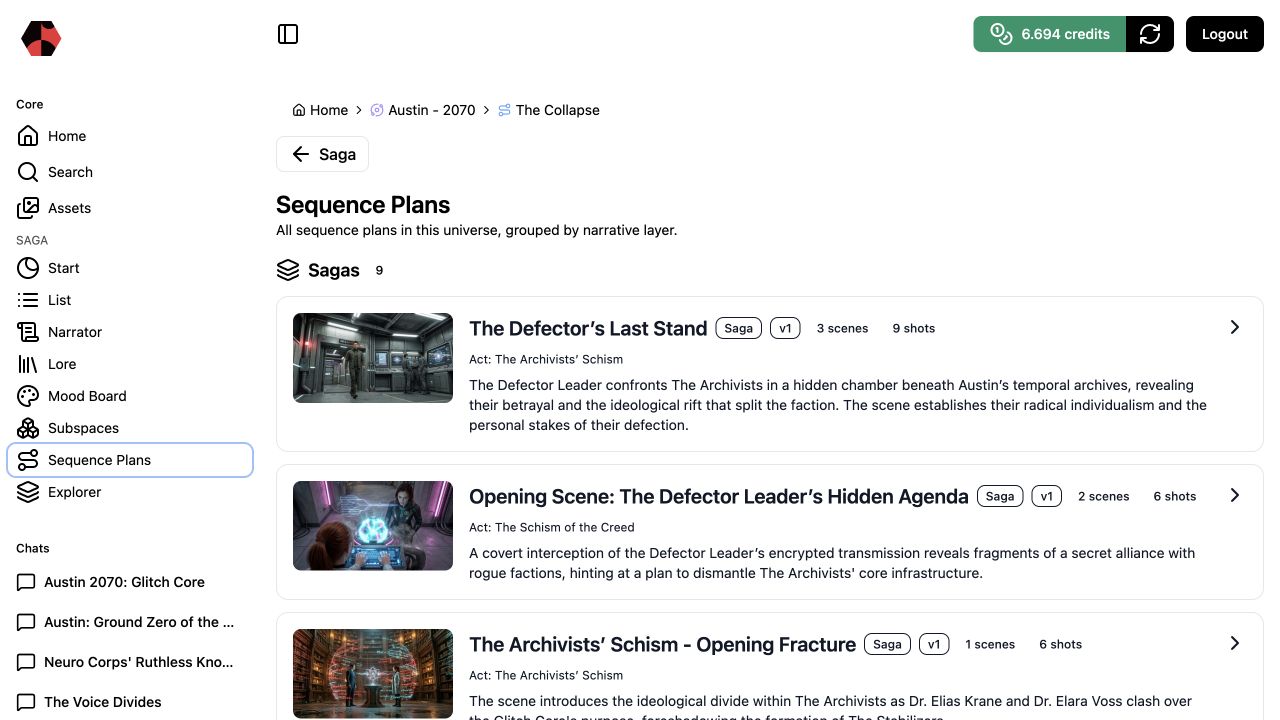
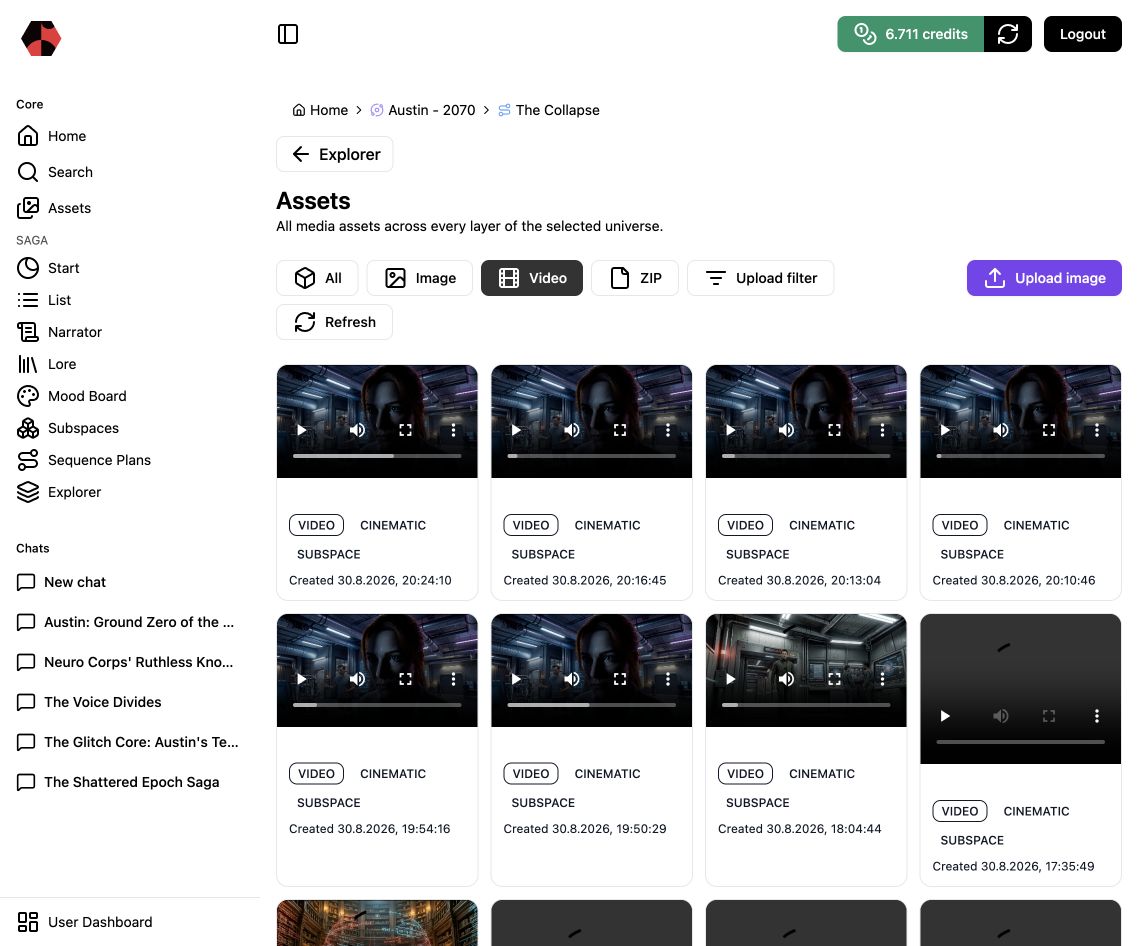
The two views show the handoff clearly: connected story context becomes an actionable sequence structure, and that structure remains close to the visual and video assets created from it.
Plan the next frame with context
- Turn narrative context into a sequence or shot-planning workflow.
- Keep character, location, and story information close to visual decisions.
- Connect visual references and generated assets to the world they belong to.
- Use AI-assisted exploration with human creative direction.
Saganode is not positioned as a generic video generator. It gives creators the connected production context that makes visual work more coherent from the beginning.
Production assets remain accessible alongside the plan, including images, video, and transferable ZIP packages.
Create connected sequence plans
A sequence is stronger when it carries the context of the story: who is present, what has changed, where the action belongs, and what the audience needs to understand. Link that knowledge to dialogue, stages, camera decisions, and assets.
A sequence plan becomes the bridge between a story world and the work of bringing it to life, allowing narrative development to move into visual preparation without losing the relationships that make a scene meaningful.
Plan native 9:16 sequences for social media
Sequence Plans now support a 9:16 aspect ratio for generated video. That means a social-first idea can be planned in its intended vertical frame from the beginning—while still carrying the characters, locations, visual references, and narrative purpose that give each shot its meaning.
Use 9:16 when the vertical viewing experience is part of the creative brief: a focused character performance, a social short, or a campaign designed for a phone-first audience. The choice is visible in the plan, so framing, attention, and pacing can be directed for the actual format instead of left to a late crop.
Carry the plan into production
The work behind a sequence should not lose meaning when the project moves into editing and post-production. Keep narrative and production context connected through the handoff and carry sequence plans into production-ready formats.
This creates a clearer transition from connected ideas to story development, visual planning, editing, and post-processing.
Explore next
From story context to visual planning.